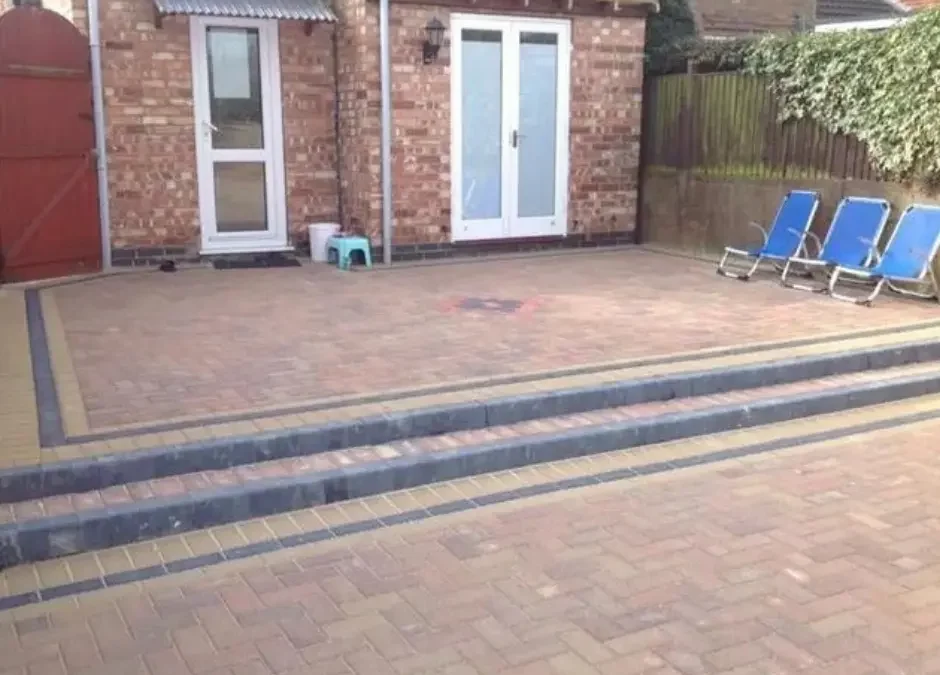
Block paving is the most popular driveway surface in Romford, and for good reason. It offers more colours, patterns and design options than any other finish, it suits both period and modern homes, and a single stained or cracked block can be lifted and replaced rather than resurfacing the whole drive. But the quality of block paving contractors varies enormously, and the parts of the job that decide how long it lasts are the ones you never see. This 2026 guide explains the block types and patterns worth knowing, what block paving should cost in Romford, the Havering planning rules that apply, and how to choose a contractor with confidence. If you already want a trusted local team, you can go straight to our guide to block paving in Romford. Otherwise, read on.
What a good block paving contractor in Romford does
A reputable contractor manages the whole project, not just the blocks on top. That means surveying the ground and drainage, excavating to the correct depth, laying and compacting a proper sub-base, fitting concrete edge restraints, building in drainage, then laying the blocks in the right pattern and finishing the joints correctly. The best firms carry out every stage in-house so one team is accountable from the free survey to the final inspection. As experienced installers of block paving in Romford, that is exactly how Trade Wright Paving and Landscapes works.
Why Romford’s ground makes contractor choice so important
Romford sits largely on London Clay, a shrink-swell soil that expands in wet winters and contracts in dry summers, and the lower ground near Raphael Park lies within the historic floodplain of the River Rom, where the water table is higher. Both conditions cause poorly built driveways to sink, rut and lift. A competent contractor counters this with deeper excavation, a geotextile membrane, and a compacted MOT Type 1 sub-base laid in layers, which follows the standard set out in the UK Specification for Highway Works. If a quote does not mention the sub-base depth, treat that as a warning sign.
Types of block paving for Romford homes
The term “block paving” covers several very different materials, and the right one depends on your budget, the look you want and how the surface will be used.
Concrete block paving is the most common and cost-effective choice, available in a huge range of colours, sizes and textures, from crisp modern charcoals to tumbled, aged finishes. Premium ranges from brands such as Marshalls and Brett add durability and colour that lasts.
Clay pavers are fired brick pavers prized for colour that never fades and a warm, characterful finish that suits period Romford homes. They cost more than concrete but hold their looks for decades.
Natural stone setts, such as granite or sandstone, sit at the premium end and deliver a high-end, heritage appearance with exceptional strength.
Permeable block paving is laid with open joints so rainwater drains straight through into a stone reservoir below. It is a smart choice on London Clay because it manages surface water and usually keeps you clear of planning permission.
Block paving laying patterns explained
The pattern is not only about looks, because it affects strength. For driveways carrying vehicles, herringbone, laid at 45 or 90 degrees, is the gold standard, since the interlocking bond resists the twisting forces of turning wheels and braking. It is the pattern specified in the British Standard for vehicular paving, BS 7533. Stretcher bond gives a clean, contemporary look and suits large-format blocks. Basketweave is a classic pattern best kept for patios and light-use paths rather than driveways. A contrasting soldier-course border frames the drive and locks the edges. A good contractor recommends the right pattern for how the surface will be used, not just how it looks.
The seven checks before you hire a block paving contractor in Romford
Use this as your shortlist filter. A contractor who passes all seven is worth a quote. One that misses several is not truly comparable on price alone.
1. Sub-base specified in writing. The quote should state the excavation depth and the MOT Type 1 sub-base build-up.
2. Full insurance. Ask to see public liability cover before paying any deposit.
3. A written workmanship guarantee. A serious contractor backs the work in writing.
4. Installation to BS 7533. Naming the standard signals genuine block-paving expertise.
5. Genuine, recent, named reviews. Look for dated Google reviews from named customers. Independent checks such as Checkatrade and TrustMark add reassurance.
6. A portfolio of real local work. Ask to see recent block paving in Romford, Gidea Park or Collier Row.
7. Sensible payment terms. Avoid anyone demanding a large cash deposit up front.
How much does block paving cost in Romford in 2026?
Block paving prices in Romford sit slightly above the national average, because London and the South East typically add 20 to 30 per cent to baseline costs. The figures below are realistic 2026 installed prices for the RM postcodes and include a proper sub-base. Permeable systems and natural stone sit at the higher end. Every project needs a survey for an exact figure, because size, excavation, access, edgings and drainage all affect the total.
| Block type | Typical 2026 cost (per m², installed) | Guide price, 50m² two-car drive |
|---|---|---|
| Standard concrete blocks | £100 to £140 | £5,000 to £7,000 |
| Permeable block paving | £120 to £160 | £6,000 to £8,000 |
| Premium or tumbled ranges | £130 to £170 | £6,500 to £8,500 |
| Clay pavers or natural stone setts | £150 to £220 | £7,500 to £11,000 |
Budget separately for drainage or groundworks, commonly £600 to £1,500, and for a dropped kerb if you do not already have one. The cheapest quote is rarely the best value, because premium blocks laid on a shortcut sub-base will fail long before standard blocks laid properly.
Planning permission and permeable paving in Romford
Romford is in the London Borough of Havering. For the paving itself, you generally do not need planning permission if the blocks are permeable, or if rainwater drains to a permeable area within your property rather than onto the road. If you lay more than five square metres of impermeable blocks at the front without drainage, permission can be required, which is exactly why permeable block paving is such a sensible choice locally. The rules are on the Planning Portal and in the Government’s permeable surfacing guidance.
Dropped kerbs in Romford: what Havering charges
If your driveway needs vehicles to cross the pavement, you will need a dropped kerb, also called a vehicle crossover. In Havering there is a non-refundable application fee of around £261, plus a construction charge per square metre that has risen in recent years, and some roads require planning permission first. The details and application form are on the Havering apply for a dropped kerb page. A professional contractor manages this for you.
A note for Gidea Park homeowners
If your property is in the Gidea Park conservation area, the historic Garden Suburb, it has an Article 4 Direction. This removes some permitted development rights, so front garden and driveway changes that would be automatic elsewhere may need planning permission here. We check this for you as part of the survey.
Looking after your block paving
Block paving is low maintenance, not no maintenance. The joints are filled with kiln-dried or polymeric sand, which stabilises the surface and blocks weed growth, and it needs topping up roughly every three to five years. An occasional wash keeps the colours fresh, and optional sealing adds stain resistance. The repairable nature of block paving is a genuine long-term saving, because a single oil-stained or cracked block can be swapped rather than resurfacing the whole drive. We leave every customer with a few spare blocks for exactly that reason.
Red flags: how to avoid a poor block paving job
Be cautious of doorstep sellers offering a “leftover materials, today only” deal, quotes far below everyone else, demands for large cash deposits, no written contract or guarantee, and blocks laid on dabs of mortar instead of a full bedding course over a compacted sub-base. These are the hallmarks of driveways that look fine on day one and sink or spread within a couple of winters.
Why Trade Wright is the best choice for block paving in Romford
Trade Wright Paving and Landscapes meets every point on the checklist above. We specify sub-base depth and MOT Type 1 in writing on every quote, and we install to BS 7533 with proper edge restraints and drainage designed for Romford’s clay and the higher water table near the River Rom. We are fully insured, we provide a written workmanship guarantee, and we have a strong record of real projects across Romford, Gidea Park, Collier Row, Emerson Park and Harold Wood. Because we deliver block paving, driveways, resin, tarmac, patios, fencing and landscaping under one team, there is a single point of accountability from survey to completion.
We also quote honestly and clearly, with a fixed written price after a free survey and no pressure to spend more than you need. That mix of proper engineering, genuine local knowledge and plain-speaking service is why homeowners choose us for block paving in Romford. You can also explore our wider work on our paving contractors Romford page, or compare surfaces in our guide to driveways in Romford.
Areas we cover around Romford
We install block paving across the RM postcodes, including Gidea Park, Collier Row, Emerson Park, Harold Wood, Rise Park, Ardleigh Green and Havering-atte-Bower. Wherever you are, the process is the same: a free survey, honest advice, a fixed written quote and workmanship you can rely on.
Ready to choose the right block paving contractor in Romford?
If you want a team that gets the groundwork right and the finish perfect, we would be glad to help. Visit our guide to block paving in Romford to see the full service, or contact us for a free, no-obligation survey and written quote.
Frequently asked questions
How much does block paving cost in Romford? As a 2026 guide, standard concrete block paving is around £100 to £140 per square metre installed, or roughly £5,000 to £7,000 for a two-car driveway of about 50 square metres. Permeable, premium and natural-stone options cost more. A free survey gives an exact fixed price.
What is the best pattern for a block paving driveway? Herringbone, laid at 45 or 90 degrees, is the strongest and the standard for driveways, because it resists the twisting force of vehicle wheels. Basketweave is best kept for patios and light-use paths.
Do I need planning permission for block paving in Romford? Usually not if the paving is permeable or drains within your property. Impermeable blocks over five square metres at the front, without drainage, can require permission, and the Gidea Park conservation area has extra controls.
Do I need a dropped kerb, and what does Havering charge? If you cross the pavement to park, yes. Havering charges a non-refundable application fee of around £261 plus a per square metre construction charge, and some roads need planning permission first.
How long does block paving last, and how long does it take to install? Laid correctly on a proper sub-base with edge restraints, block paving lasts 20 to 30 years or more. Most driveways are completed within 3 to 7 days, depending on size and ground conditions.
Does block paving get weeds, and how is it maintained? Weeds grow in the joints only when the jointing sand runs low. Topping up the kiln-dried or polymeric sand every few years, plus optional sealing, keeps them at bay.
Is block paving suitable for Romford’s clay soil? Yes, provided it is built on a deep, compacted sub-base with proper drainage. The groundwork matters more than the blocks on top.
Can you repair a sinking or damaged block paved driveway? Yes. We assess the cause, and where the sub-base has failed we rebuild the affected area and re-lay the blocks, which is far cheaper than a full replacement if caught early.