
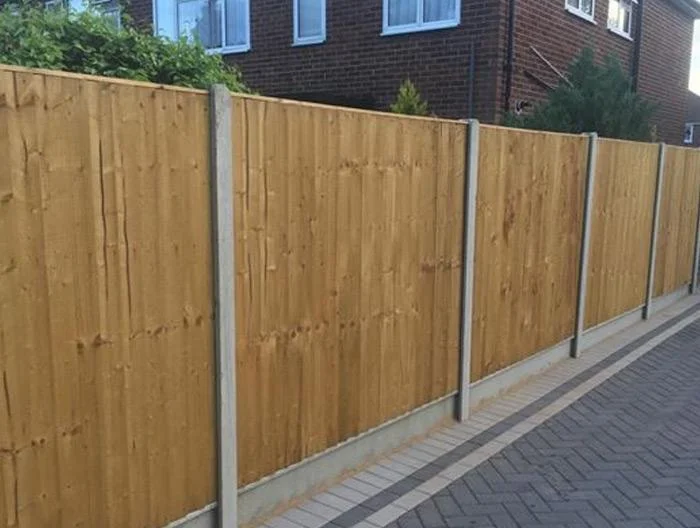
Good fencing does three jobs at once in Brentwood: it gives you privacy and security, it defines your boundary, and it stands up to the weather on exposed Essex ground. Getting it right means choosing the correct style and height, understanding the planning and boundary rules, and most importantly building it on posts and foundations that won’t lean or rot. This guide covers all of that, with real 2026 costs, so you can plan with confidence. Trade Wright Paving & Landscapes installs fencing across Brentwood and the surrounding area, and this is the advice we give at every survey.
Why fencing needs doing properly in Brentwood
Much of Brentwood sits on London Clay, a shrink-swell soil that moves with the seasons, while the higher ground around Hutton, Shenfield and Warley is noticeably exposed to wind. Both work against a poorly installed fence: shallow posts loosen as the clay moves, and solid panels act like sails in a gale until they crack or blow out. A fence built for local conditions deep, well-concreted posts and, where needed, a wind-permeable design is the difference between a boundary that lasts fifteen years and one you’re repairing after the first bad storm.
Types of fencing for Brentwood homes
The right style depends on how much privacy, strength and wind resistance you need, and the look you want.
Closeboard (featheredge) is the strongest traditional timber fence overlapping feather-edge boards fixed to horizontal rails, built on site for a solid, secure, long-lasting boundary. Ideal for security and full privacy.
Panel fencing (lap/overlap or tongue-and-groove) is the most cost-effective option, quick to install and available in many styles a popular choice for rear gardens.
Slatted and contemporary fencing gives a clean, modern look and, crucially, lets wind pass through the gaps the smart choice for exposed gardens on Brentwood’s higher ground.
Hit-and-miss fencing alternates boards front and back, giving privacy from both sides plus wind resistance and strength.
Picket, post-and-rail, composite and metal round out the range picket and post-and-rail for front gardens and rural plots, composite for a near-zero-maintenance modern finish, and metal or railings for security. We also supply and fit matching gates.
Posts and foundations – the part that decides how long your fence lasts
This is where cheap installs fail. On Brentwood’s clay, posts need to be set deep typically at least 600mm, and deeper for taller or exposed runs in properly mixed concrete finished with a dome so rainwater sheds away rather than pooling around the timber. You then have three post options: pressure-treated timber posts (traditional, cost-effective), concrete posts (rot-proof and very long-lasting, ideal on damp clay), and galvanised steel post systems such as Durapost (maximum strength for exposed, windy gardens). Fitting concrete or composite gravel boards along the base keeps the panels off the wet ground and dramatically extends their life. Get these details right and the fence on top will last; skip them and it won’t, whatever the panels cost.
How much does fencing cost in Brentwood in 2026?
Fencing is usually priced per metre, supplied and installed. The 2026 guide figures below reflect the Essex/South-East area and include posts, gravel boards and labour. The final price depends on the fence height, the post type (concrete and steel cost more but last longer), ground conditions and access, plus removal of any old fence. Every job still needs a survey for an exact figure.
| Fence type | Typical 2026 cost (per metre, installed) |
|---|---|
| Panel fencing (lap / overlap) | £45–£75 |
| Closeboard / featheredge | £70–£110 |
| Slatted / contemporary | £90–£160 |
| Composite | £120–£200 |
| Removing & disposing of old fence | £4–£8 per metre |
As a rough example, a standard 20-metre rear-garden fence in closeboard typically lands somewhere in the low thousands installed. Concrete posts and gravel boards add a little to the up-front cost but save far more over the fence’s life by preventing rot and movement.
Planning permission, height and boundary rules in Brentwood
Brentwood is in Brentwood Borough Council‘s area, and the standard rules apply. Under permitted development you can usually erect a fence up to 2 metres high without planning permission, reducing to 1 metre where the fence is next to a highway used by vehicles (or a footpath alongside one). Replacing an existing fence like-for-like same height, same position generally doesn’t need permission even if the old fence was above these limits. Extra rules apply if your property is listed, in a conservation area, or the work affects a protected tree, so we check with Brentwood Borough Council where relevant. The official thresholds are on the Planning Portal.
One point that saves disputes: work out who owns the boundary before you start. Your title plan or HM Land Registry documents may show a “T” mark indicating responsibility for a boundary. We’re happy to advise, and we’re used to working sensitively where a fence sits on a shared line with neighbours.
Looking after your fence
Timber fencing lasts longest when it’s kept off wet ground (gravel boards) and treated periodically with a quality preserver every couple of years for softwood. Concrete posts and composite panels are effectively maintenance-free. Whatever you choose, an annual check of fixings and post bases after winter storms catches small problems before they become leaning-fence problems.
Fence repairs and storm damage in Brentwood
You don’t always need a whole new boundary. After the stronger storms of recent years, a lot of Brentwood fencing fails at predictable points a snapped or leaning post, a couple of blown-out panels, or timber rotting where it meets the ground. Where the posts and rails are sound, we can replace individual panels or re-set a single post far more cheaply than a full run. Where the posts themselves have rotted or the whole line is leaning, replacement is usually the better long-term value, because patching around failed foundations rarely lasts. As a rule of thumb: if more than a third of the fence is failing, or the posts are gone, replace it; if the damage is localised and the structure is solid, repair it. We’ll give you an honest assessment at the survey rather than pushing a full replacement you don’t need and we can often carry out storm repairs quickly to make a boundary secure again.
How to choose a fencing contractor in Brentwood
Vet installers on the parts you can’t see. Ask how deep the posts will be set and in what; whether posts are timber, concrete or steel; whether gravel boards are included; whether they carry public liability insurance with certificates available before deposit; and whether they offer a written workmanship guarantee. Check for genuine, recent, named reviews on Google. A good local contractor will happily explain the full specification and show you recent work nearby.
Areas we cover in and around Brentwood
We install fencing across Brentwood and the surrounding Essex area, including Shenfield, Hutton, Warley, Pilgrims Hatch, Ingatestone, Doddinghurst and Mountnessing. See our wider local work on our Brentwood paving and landscaping page, and combine your fencing with new garden walls or a driveway as part of one project.
Start your Brentwood fencing project
Whether you need a single run replaced after a storm or a full boundary installed, we’ll recommend the right style, height and foundations for your garden. Contact us for a free, no-obligation survey and a clear written quote.
Frequently asked questions about fencing in Brentwood
How much does fencing cost in Brentwood? As a 2026 guide, panel fencing runs around £45–£75 per metre installed, closeboard £70–£110, slatted £90–£160 and composite £120–£200, plus £4–£8 per metre to remove an old fence. A free survey gives an exact fixed price.
What is the maximum fence height without planning permission? Generally 2 metres, reducing to 1 metre where the fence is next to a highway used by vehicles. Like-for-like replacement is usually exempt, and conservation areas have extra rules.
What’s the best fence for a windy, exposed garden? Slatted or hit-and-miss fencing, ideally on concrete or steel posts the gaps let wind pass through instead of the panel acting like a sail.
How deep should fence posts be? Typically at least 600mm, and deeper for tall or exposed runs, set in concrete with a domed top so water drains away essential on Brentwood’s clay ground.
Who owns the fence, me or my neighbour? Check your title plan or HM Land Registry documents; a “T” mark shows who is responsible for a boundary. We’re happy to advise before work begins.
How long does a fence installation take? Most domestic fencing is completed in one to two days, depending on the length, style and ground conditions.